Tuesday, February 09, 2010

Kew - Historical Accounts

Kew Waterfowl Pond

Kew: Historical Accounts
The village is pleasantly situated on the southern bank of the Thames

Kew Church: Historical Accounts
Parish church built in 1714 on waste ground donated by Queen Anne

Kew Gardens: Historical Accounts
The exotic, or as it is usually called, the botanic garden, was established in the year 1760, by the Princess Dowager.

Sunday, February 07, 2010

Llandeilo - Postcard Views

Edwardian postcards of Llandeilo bridge and Dryslwyn Castle.

Llandeilo

Brighton - Views and Notes

Notes and views on Regency Square and the Royal Pavilion

Brighton - Notes and Views

Thursday, January 28, 2010

A Victorian Tourist On Fair Isle

Rising abruptly from the sea, and standing aloof alike from the Orcadian and Shetland groups, there is sublimity in the awful loneliness of the rock-girt Fair Isle.

A Victorian Tourist on Fair Isle

Wednesday, January 27, 2010

A Victorian Tourist in Stromness

In this town, so quaint and quiet, the sea is a domestic institution. It ripples familiarly up the short lanes between rows of houses, and the bows of vessels stretch across second storey windows. Pilots can row up to their own doors in boats. It is doubtless owing to this circumstance that so many of the youth of Stromness take early to the water, and embark on board ship for all quarters of the world. Several of the houses, adjoining the harbour, are provided with little stone jetties, which enable the inmates to step dry-shod from their firesides into fishing-yawls.

A Victorian Tourist in Stromness

A Victorian Tourist on Papa Westray

From Pierowall, as an excursion centre, I next crossed the beautiful land-locked bay to the pleasant little island of Papa Westray, which still commemorates in it name the Irish anchorite fathers. Papa is four miles in length by one in breadth, swelling away up from the shore in an easy slope, and terminating northwards in the bold promontory of the Moul. The green fields dipping down from the clustering dwellings on the central ridge, with the House of Holland conspicuous in their midst, exhibit traces alike of careful cultivation and of considerable fertility.

A Victorian Tourist on Papa Westray

Saturday, December 26, 2009

Victorian Cooking Methods

Baking - The Victorian Way
Surprisingly, this article is mainly about baking meat.

Frying - The Victorian Way
A very convenient mode of cookery to those who wish to unite comfort with economy, it seems. Watch that lard.

Preserves - The Victorian Way
In an age when fruits were locally-grown and seasonal, preserving them was important.

Steaming - The Victorian Way
The application of steam to culinary purposes has much to recommend it ...

Stewing - The Victorian Way
A wholesome, convenient and economical mode of cookery.
One of its great recommendations is the small amount of fuel consumed to sustain the gentle degree of ebullition required. 'Ebullition'?

Victorian Recipes

Doughnuts - A Victorian Recipe
Modern and American? Not so. Read how the Victorians made doughnuts.

Cooking Eggs - The Victorian Way
Boiled, broiled, fried, poached and more - how to cook those eggs.

Eggs - Some Victorian Recipes
Egg balls, egg curry, egg flip, egg pie, egg pudding, egg salad, egg sauce, egg wine.

Peas - Stewed, Boiled, Pudding, With Milk and Sugar

Pea soup - 5 heroic recipes

Peaches - Victorian Recipes

Pears - Jelly, Marmalade, Stewed, Preserved

Pepper - Victorian Use

Peppermint - Cordial, Drops, Lozenges

Perry - The Victorian Way

Pickles - The Victorian Way

What to do with a Pig - The Victorian Way

Pig, roast - Complete Roast Pig

Pigeon - Pigeon Pie and Other Victorian Recipes

Prawns - Victorian Recipes

Pound Cake - Victorian Recipe

Plum Cake - Four Victorian Recipes

Plum Pudding

More Victorian Plum Recipes

Sponge Cake - Victorian Recipes
Sponge cakes were important features of the Victorian way of life. Here are four recipes.

Tripe - Some Victorian Recipes
boiled, fried, roasted, stewed, friccassed ... all stomach turning. Literally.

Wednesday, December 23, 2009

Sunday, October 25, 2009

Countering Myths About Welsh

A couple of recent blog posts that tackle some myths about the Welsh language:

Silly things people say about Welsh II

Two stupid things people say about Welsh

Friday, September 18, 2009

Prehistoric carvings in Orkney

Following the discovery of a 5,000-year-old 3.5cm tall stone carved figurine during excavations funded by Historic Scotland at the Links of Noltland prehistoric settlement on the Orkney island of Westray, parallels have been drawn with prehistoric carvings on the Holm of Papay, a small island off Papa Westray

Tuesday, August 25, 2009

Rating Facial Attractiveness

Three pieces of research on attractiveness:

Women are as complicated as men say they are when evaluating potential mates.

People who know each other well are more likely than strangers to agree on the attractiveness of faces.

A study of a psychological phenomenon called "attentional adhesion" found that whatever the motive, we are automatically and strongly drawn to attractive people and are rendered temporarily unable to avert our attention.

Rating Facial Attractiveness

Sunday, August 23, 2009

Race And Ethnicity Confusion

Psychological research on racial prejudice tends to give the impression that 'colour' and ethnic groupings are clearly defined. But a study research published earlier this year points to confusion in the way people identify themselves and in official classifications, at least in the United States.

Race And Ethnicity Confusion

Novelty and the Brain

Infants who are excellent at processing novel information when they are just 6- and 12-months-old are likely to demonstrate excellence in intelligence tests and academic achievements as young adults in their 20's.

Infants, Adults and Novelty

Thursday, August 20, 2009

Croatia

Croatia's idyllic Dalmatian islands, the tumbling cascades in Plitvice National Park, the marble streets of medieval Dubrovnik and Diocletian’s amazing Palace in Split all contribute to Croatia's soaring popularity.

Croatia

Wednesday, August 19, 2009

Islands in the Pacific

A Hiking Guide to Easter Island

Fiji - Backpackers and Billionaires

Samoa a South Pacific Travel Sensation

Costa Rica

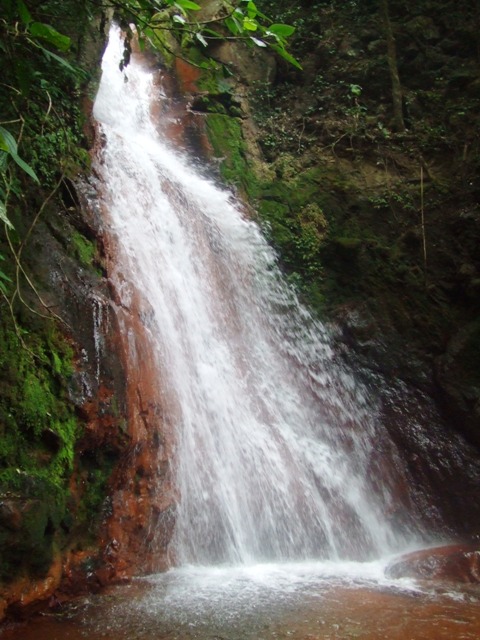
Costa Rica - Waterfall


Costa Rica is often voted as one of the best travel destinations. With a population of just over 4 million, Costa Rica straddles Central America between the Pacific and the Caribbean. The climate differs widely across the country, with two main seasons: dry (November-April) and wet (May-October). The Pacific province of Guanacaste has the dryest climate, although rainfall in the wet season maight make you think otherwise.

Costa Rica
Volcanic Costa Rica
Cloud Forests
Nicoya, Costa Rica

Tuesday, July 21, 2009

The Walter Family Of Babcary, Somerset

Genealogical account of the family of Ann and Walter Walter and their descendants.

Walter Walter (1804-1877) lived at the 110 acre Greenhill Farm, Lower Foddington, Babcary, Somerset. He was married to Ann Leach Penny (1814-1889) who was born in the neighbouring village of Charlton Mackrell, Somerset.

The Walter Family of Babcary, Somerset, England

Albert Walter - Illinois and the Civil War
Albert Walter was born in Babcary, Somerset, England in 1840, the son of Walter and Ann Walter. He emigrated to the USA and died in the Civil War.

Hugh and Robert Walter in America
Hugh Penny Walter and Robert Leach Walter emigrated to the USA and settled in Barber County, Kansas

Family of David Walter
Born Babcary, Somerset, died in Swansea, Glamorgan.

Family of Benjamin Walter of Slough and Eton
Born Babcary, Somerset, died Slough, Buckinghamshire.

The Horne Family of Careby, Lincolnshire, England, UK

A genealogical account of the family of Henry and Elizabeth Horne.

The Horne Family of Careby, Lincolnshire, England, UK

Thursday, July 02, 2009

Palma Majorca

Palma is the capital city of and the island of Majorca's main port. It is on the south coast of the island, on the Bay of Palma with a population of around 383,000. The city's came name from the Romans who first set up a hilltop base in this area. There is very little that is Roman remaining, but some portions of the walls from this settlement can be seen around the city. Another wall was built by the Moors in the 10th Century in this area, but this is no longer standing.

More at: Palma Majorca